Notes about Mid-20th century early childhood in the U.S.
Here the Anthropologist describes features of a normal childhood I experienced in the 1950s. One thing about trauma, even chronic trauma, is that it isn’t the entire story. It may demand inordinate attention for some time, but meanwhile there are ordinary moments that are worthy to revisit. Writing this, I find the truth of Einstein’s comment, “People like us…know that the distinction between past, present and future is only a stubbornly persistent illusion.” With some incidents that follow, it is not like a recollection that I remember. It is as if I am alive in that very moment and always will be.
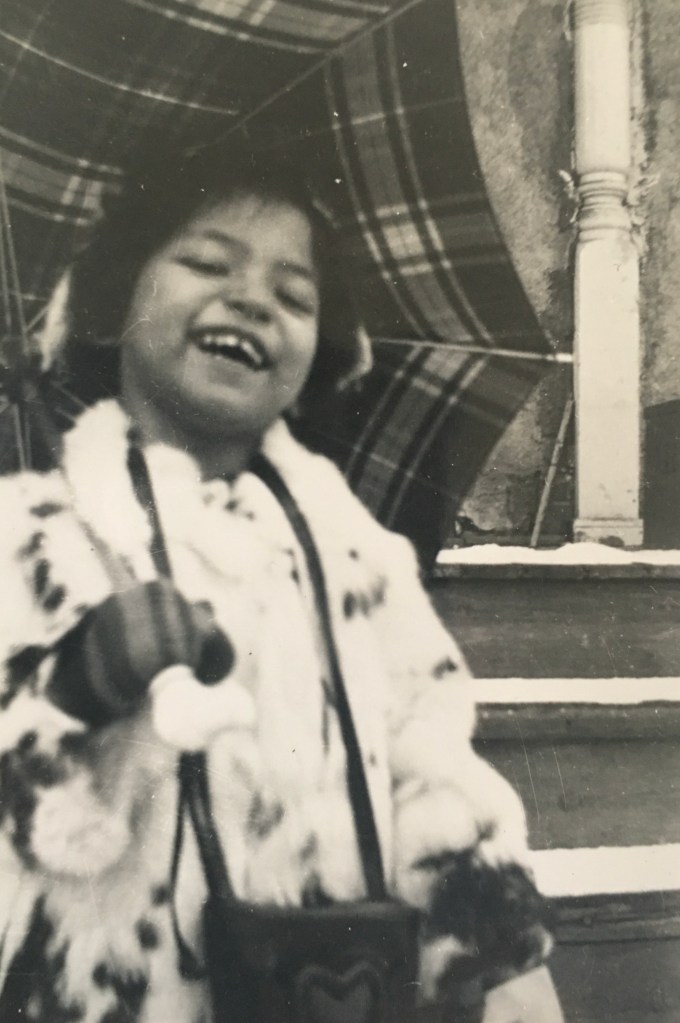
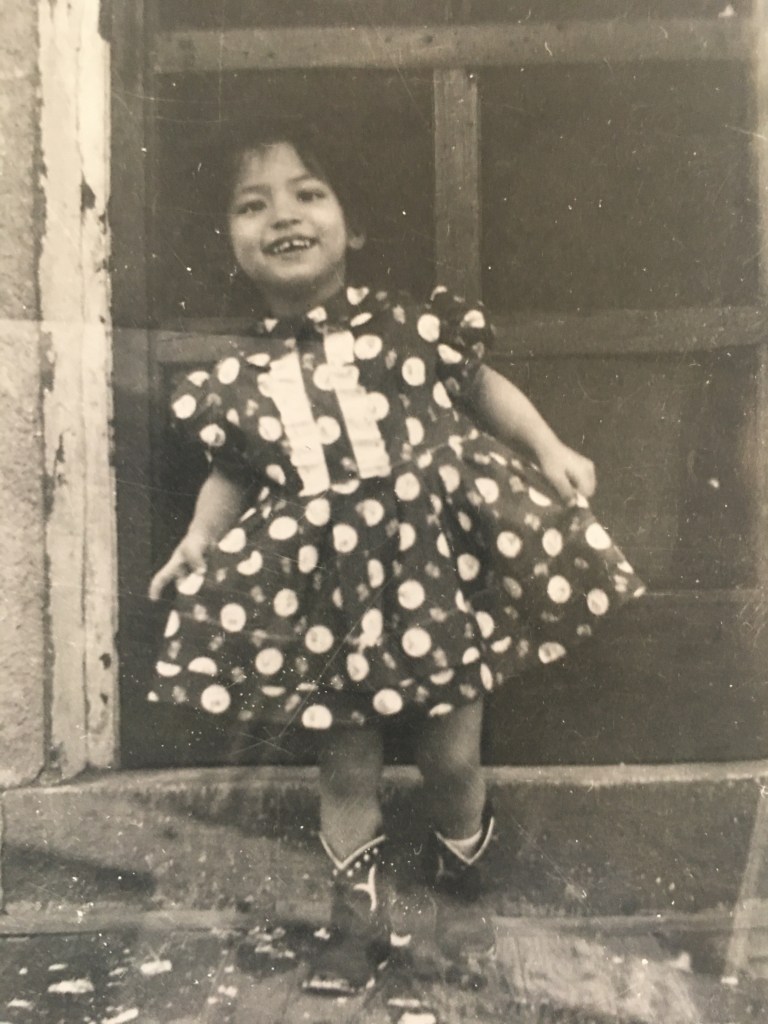
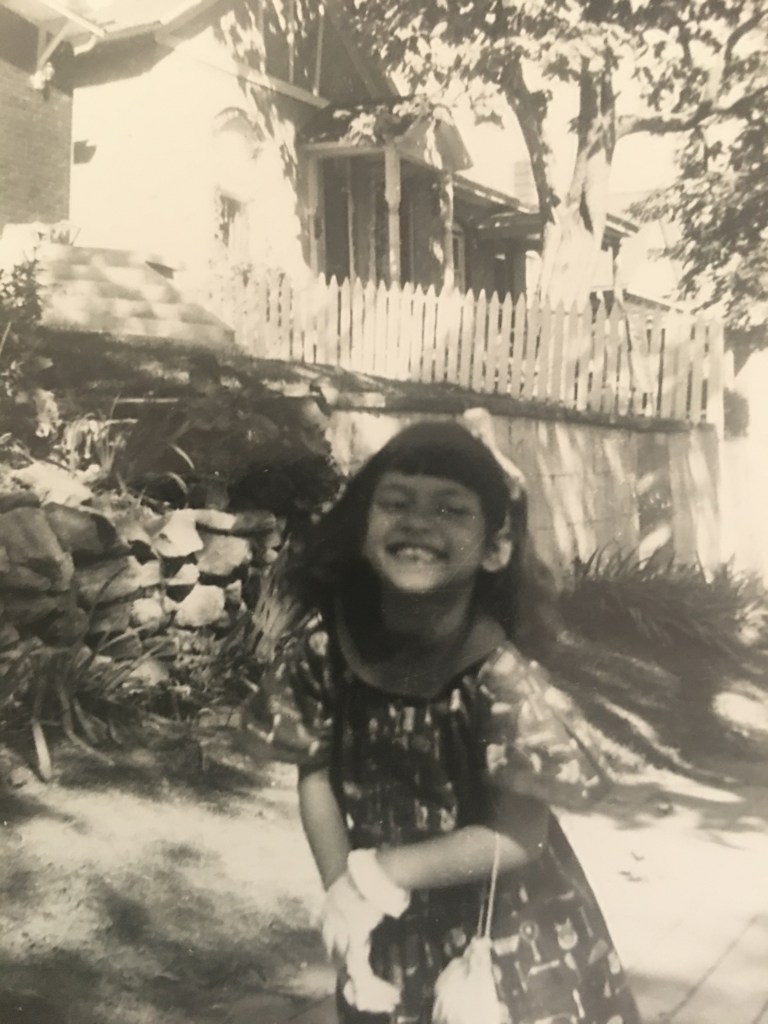
When I was about four years old we moved out of Gma’s home on 24th Street to live in a pleasant corner house with a yard. I am not sure whether the clown night-light in my bedroom reassured or frightened me more than the dark. We had a vegetable garden with the sweetest green peas I have ever eaten. Mama would fill small cartons to freeze, so even now I love to eat peas crisp and cold from the freezer. I recall friends coming for a party, and my mother explaining that I was supposed to let the guests win the games: clothespins dropped into a milk bottle while standing on a chair, pin-the-tail-on-the-donkey. I hated an older girl who made me cry by claiming I was adopted.
We lived across the street from The Jewish Community Center. Gma and Mama delighted in a story about parents’ night when I attended preschool there. They searched for my animal sculpture in the display, admiring the bears and lions and dogs. I heard this story so many times that I have in mind a vivid picture of a shelf with the clay works on it. “Here’s Dani’s work,” the teacher said, handing them a worm. Depending on the storyteller’s mood, the point was either that I was such a perfectionist, I would not attempt anything that could not be rendered accurately…or that I was so lazy and/or slow that a worm was all I could manage. Years later, when I was reading Freud and going through psychoanalysis – well, you can imagine the fun I had with the idea that Dani was trying to communicate through the phallic imagery. From this vantage, though, the Anthropologist concludes that in those days I was digging up earthworms with George many Fridays to go fishing. Dani knew earthworms, so of course that’s what she did when told to sculpt an animal.
My best memory of the community center is set at night. I had run away from home, but had only managed to cross the street and wander up the block. I was sitting on a bench in front of the community center under a street lamp and saw my mother hurrying down the street to fetch me. I can still feel keenly that ideal moment, perfectly balanced between my triumph at having achieved independence, my eagerness to dare the unknown night, and my relief that Mama would soon take me home.
Gma claimed that I had a best friend in preschool, that Jimmy and I were inseparable. It was so cute, she said, because he was a little Chinese boy. In retrospect, I wonder about that since there is no trace of any such friend in my memory. If there was such a boy, were we really friends or did the teachers just foist us off on each other because we were both Asian? Or did Dani describe a make-believe friend so completely that they believed it was true? If that’s the case, what does it say about Dani’s shadowy subconscious world? If there was a real Jimmy in class with me, could he have been my biological brother?
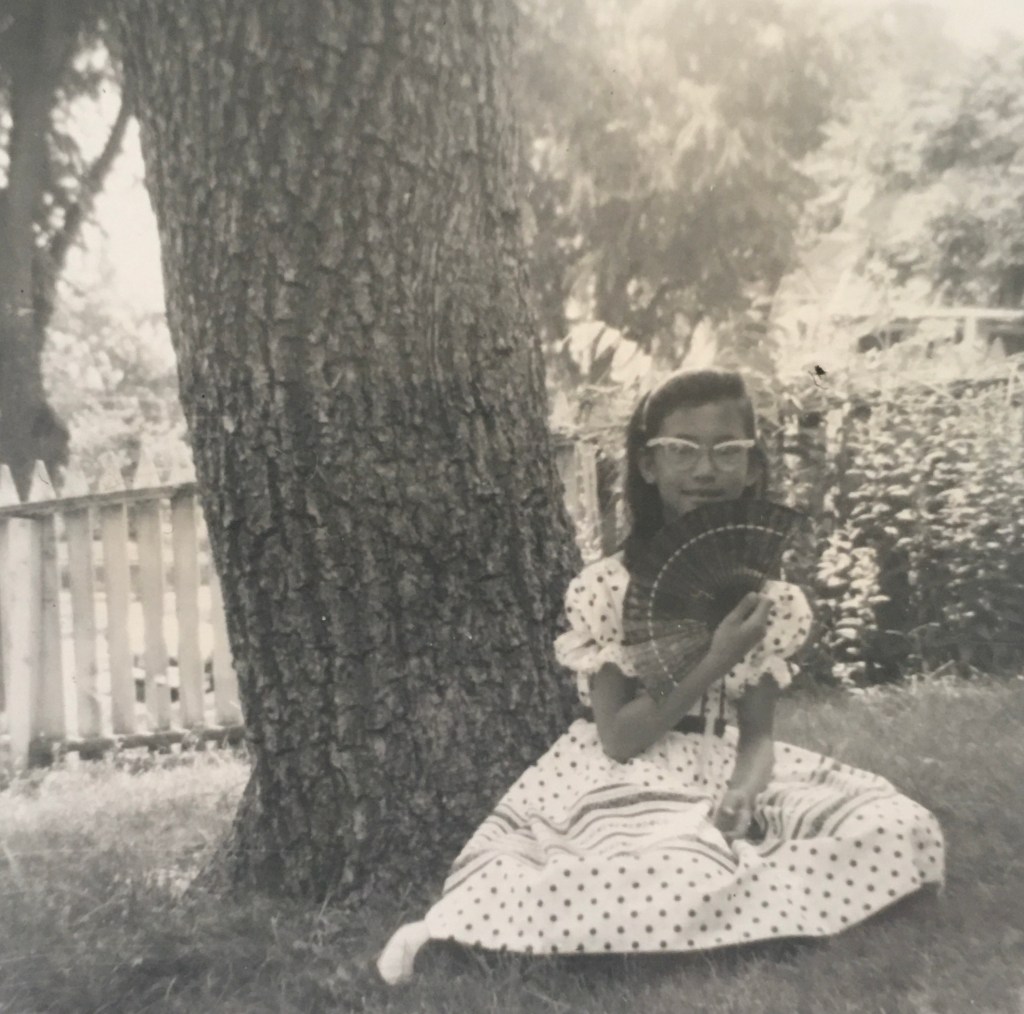
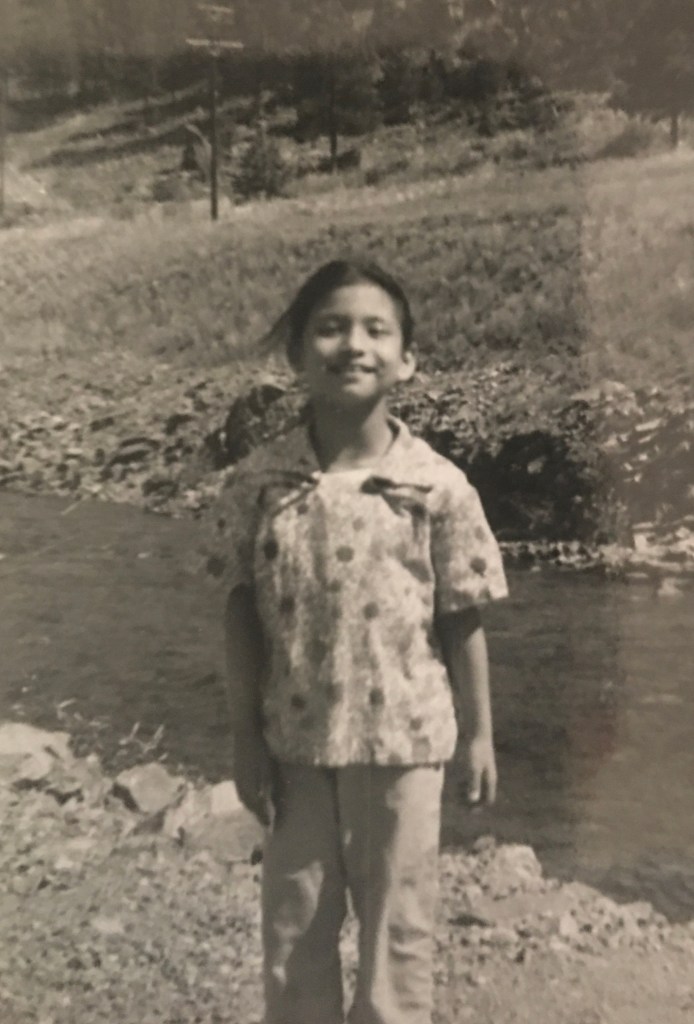
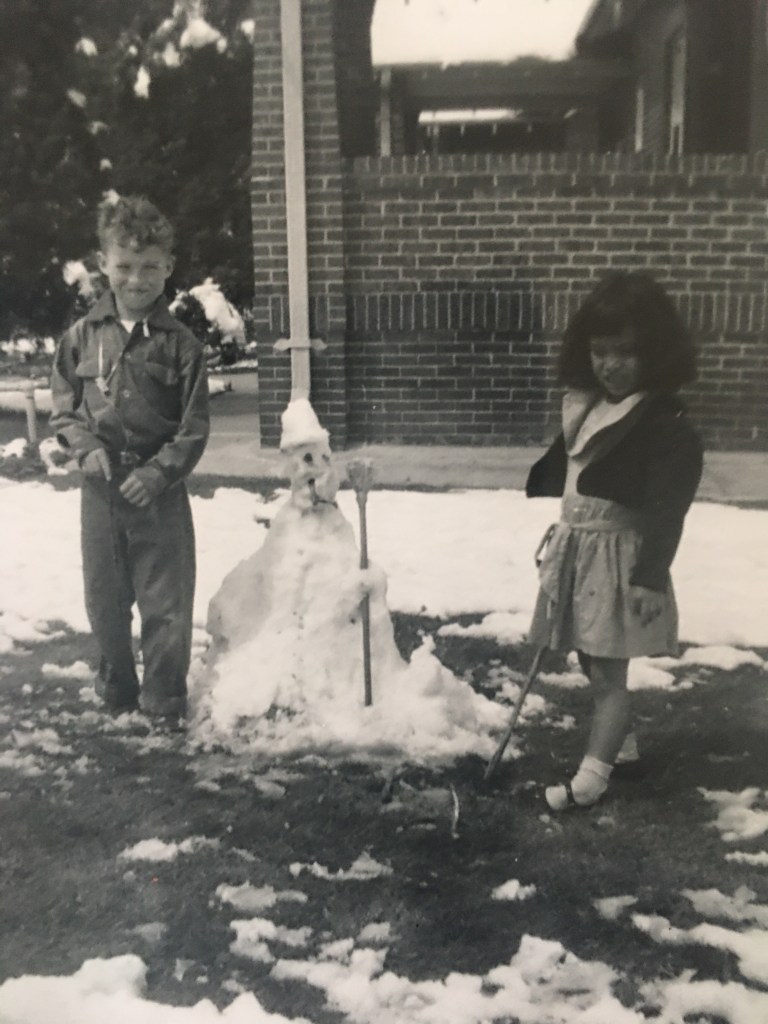
I don’t think Jimmy was make-believe. I did have several imaginary friends for many years, and I remember each in great detail and with enduring love. The catalpa tree in my Gma’s front yard was a close companion who listened to all my stories and advised me. Grace and the other two plaster mannequins in Lerner’s display window greeted me every morning when my bus stopped at the light in front of their store on the way to school. And the twins – how I adored Paul and Paula! (In the picture above, Dani is flanked by Paul on her left and Paula on her right.) We played every day. I had a pogo stick, so they did too, of course. The three of us would bounce all over the backyard in a contest to see who could go the longest or highest and then perch on our sticks, leaning against the house, and talk. Or we would ride our horses together, galloping round and round the block. I had two horses: Star who was black with a white blaze on his forehead, and Snow, who looked like her name.
I did have other friends in the neighborhood: the rowdy boy next door, Phyllis around the corner, and her brothers. We raced up and down the alleyway, a noisy pack playing some kind of tag and war until my mother would yell for me to come home. Her call “Dan-eeee” or “Di-annnne” could reach a two-block radius. However, the catalpa and Grace, Paul and Paula were as substantial to me as those who had physical bodies.
I also had my cousins. George had two brothers. His younger brother Bruce had returned from World War II with an Italian bride named Anna who made such a good tomato sauce that I have never tasted better, no matter how expensive the restaurant I tried. George’s older brother Fred was married to Aunt Donna and had two children: Kendall, a freckled red-head and his younger sister, always called Munchie. (I never learned her real name.) Kendall was more competent on the water than me, but wasn’t arrogant about it. Once we used clay to make ourselves tiny bowling balls and pins, to imitate our fathers who took personalized balls, far too heavy for us to lift, in special bags to the bowling alleys. I recall making a tiny turkey since they were always talking about who had got a “turkey.” I didn’t know they were referring to three strikes, a score. My other memory is from their basement. Kendall and I rigged up a ski slope with pillows piled on a couch all the way up to the ceiling. We were urging Munchie to try it out in a cardboard box when Aunt Donna came screaming down the stairs, claiming we were trying to kill Muchie. That was unfair. We were being somewhat scientific, reasoning that it would be safest to have a smaller, lighter person try out our engineering first.
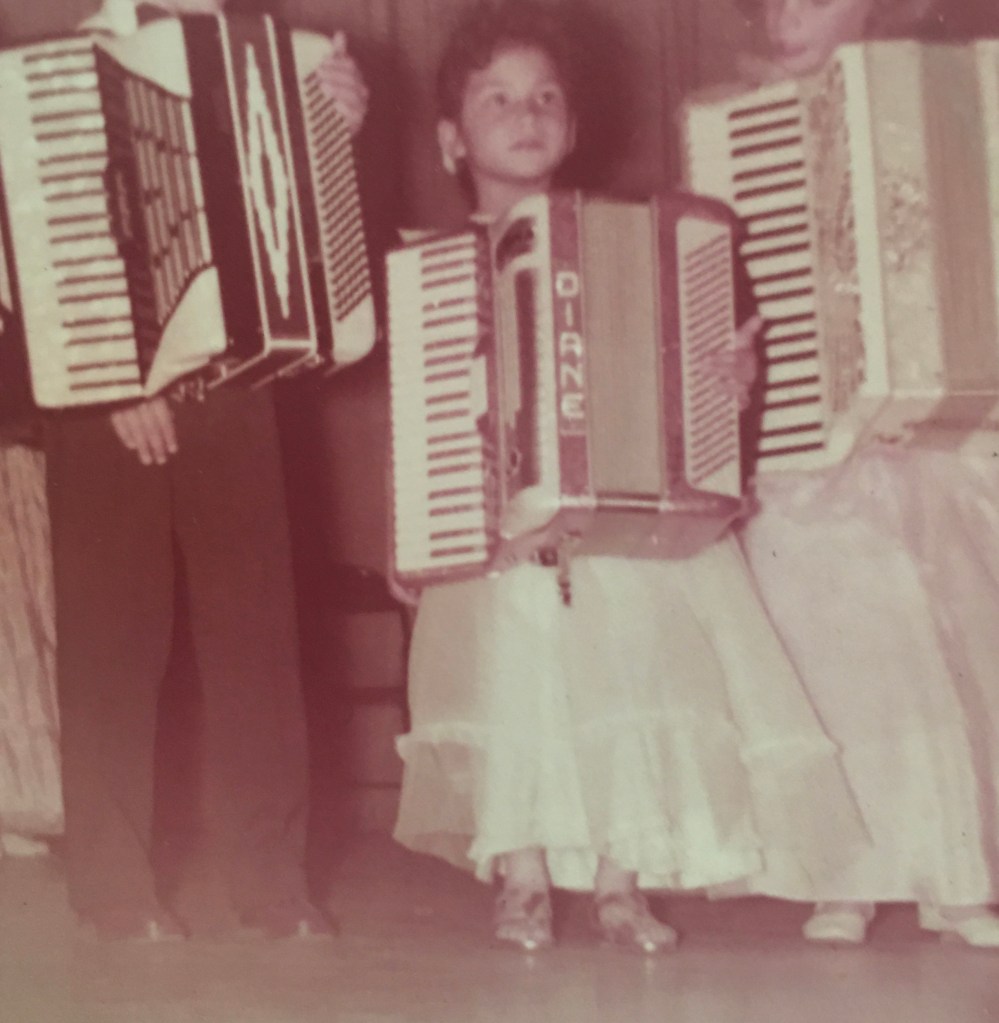
I had music lessons at a very early age, with my first recital when I was five years old. Where did my mother get the idea of an accordion? Perhaps it was Lawrence Welk; he was very popular in those days. Every week Mama hauled the huge suitcase and me downtown for lessons with a woman who would reward me with tiny vials of perfume or sample lipsticks from the bottom drawer of a file cabinet if I had practiced enough to play well. I remember a white accordion as big as my torso, replaced a few years later with a bigger one that had laminated gold glitter and my name in rhinestones attached. I wish I could find the picture of me at that first recital, grinning with a tooth missing. My hair is pulled back with bangs permed into a fuzzy pompom on top of my forehead. I wear an organdy dress accessorized with the accordion that reaches from my chin to shins. I was very pleased with my performance, although I suspect that amounted to getting on stage and wheezing a few notes without dropping the huge instrument.
The accordion led to my first instruction in antiracist awareness. The tune I recall practicing over and over was Stephen Foster’s “Camptown Ladies.” The song was a standard of minstrel shows, with white performers in blackface acting out parodies of African-American culture. The song is quite the earworm, though, so it is natural that I was humming it one day and probably practicing my fingering (air-accordianing?) when my Gma took me on the bus across town. Denver was quite segregated at the time. African-Americans lived on the East Side, Latinos on the North, but the buses were not like the Jim Crow South. When an older Black woman got on the bus and sat near us, it was the first time I had seen someone like her. As the woman climbed the steps and paid her fare, Gma shushed me and told me to stop humming the song. Why? Gma didn’t give me a detailed explanation, only said that the song might make the Black woman feel bad so should be silenced. This was 1953, before the massive Civil Rights struggle, and Gma knew to do that. I am still amazed, impressed.
George loved water, so weekends were spent either water skiing on Sloan’s Lake or fishing in the mountains. I did quite well on my tiny skis, better than Mama who preferred to just watch and sunbathe with a towel spread over the purple when her back was exposed. Unlike George or cousin Kendell, though, I never could master balancing on one ski or a 180-degree turn or using the floating ramp to jump midair. Years later, I learned that body memory fades over decades. I attempted to water ski again when I was in my thirties, confident as I settled into the familiar starting crouch in the water with the ski tips poking out, eager to feel that speeding glide over the surface. But I could not get up over the skis and was just pulled forward, dragged head-first into the water. I failed several attempts.
I enjoyed hunting for the earthworms but did not like fishing. I recall howling when a hook caught in my hand and wondering if it hurt the worms the same way. I liked the mountain water, though, cold and singing. I wandered up and down the streams while George fished.
George’s other passion was speedboat racing. He and my classmate Eddie Fisher’s father spent hours working on boats and engines in the Fisher’s garage. We drove hours to lakes around the state for his races. Mama and I would lounge around, bored, and then for a few brief minutes she would watch him through binoculars. I never recall him winning. The only memorable race was at Lake Gunnison. It was almost a two-day drive, dragging a boat up and down narrow roads through the Rocky Mountains to a huge, deep lake. Mama and I leaned against the car to watch the boats far away. Suddenly a loudspeaker announcement ended the whining of the engines, and commotion rippled through the crowd. The race seemed over, and Mama was wide-eyed. Had George actually won? No, a boat had capsized, and everyone was holding their breath hoping to find the racer. I held my breath, hoping it was George. After some tense minutes, they recovered the man sputtering, but alive. It wasn’t George.
Continue to Lost and Found
Return to Song of Samuel index
 Hook-Line-and-Thinker