Hexagrams: reflections on the Book of Changes
Index to my watercolor responses and notes
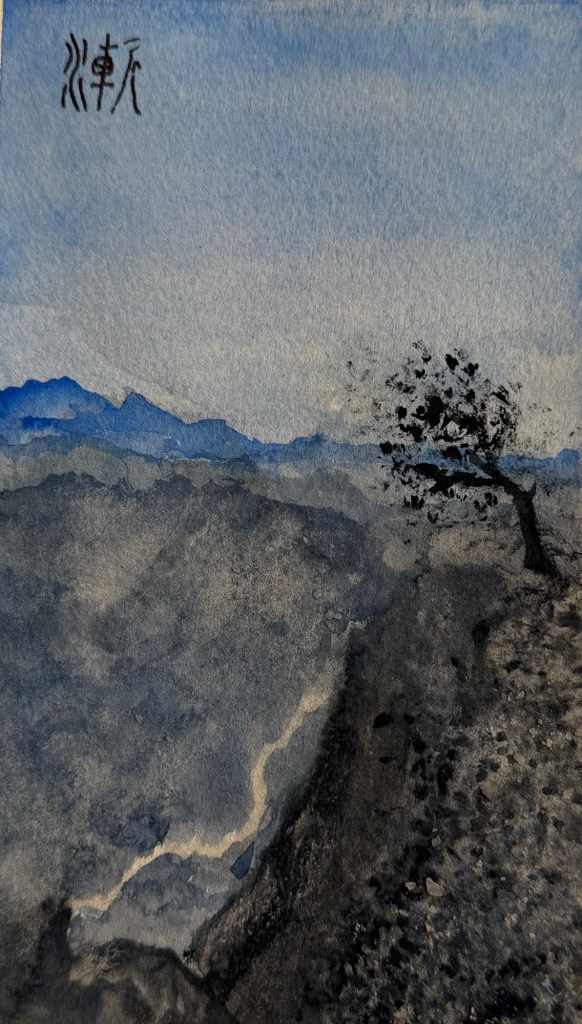
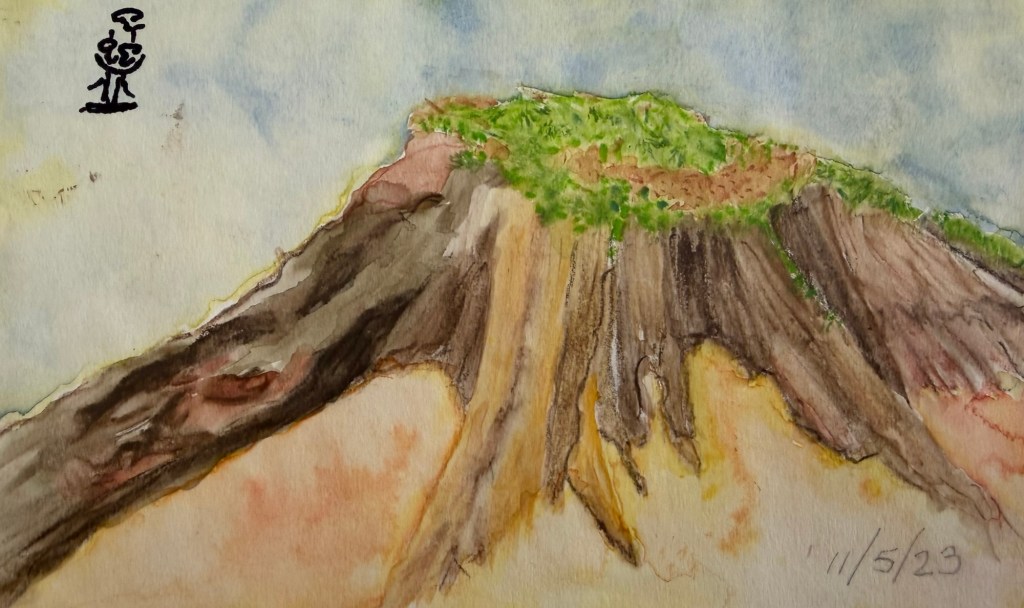
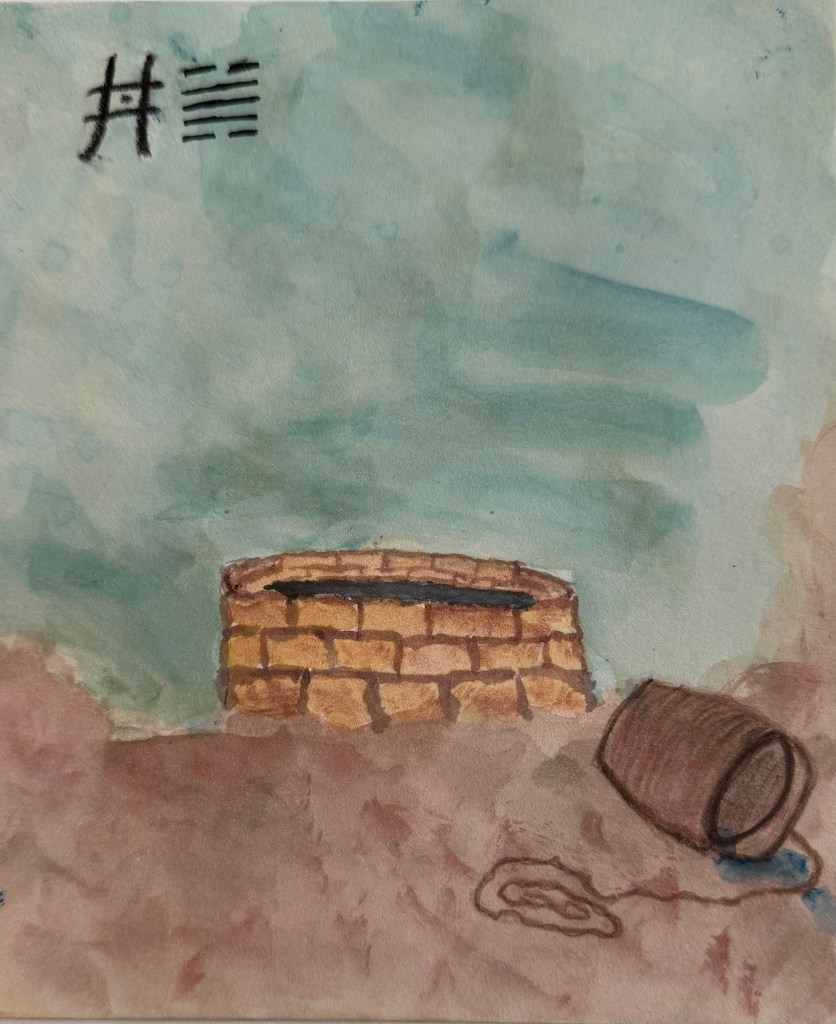
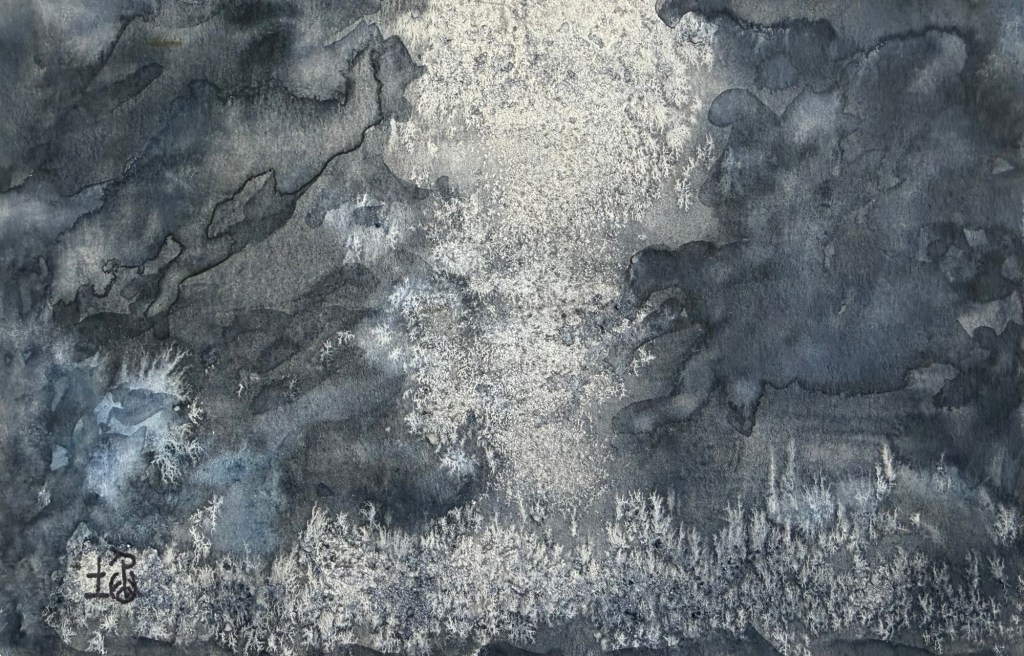
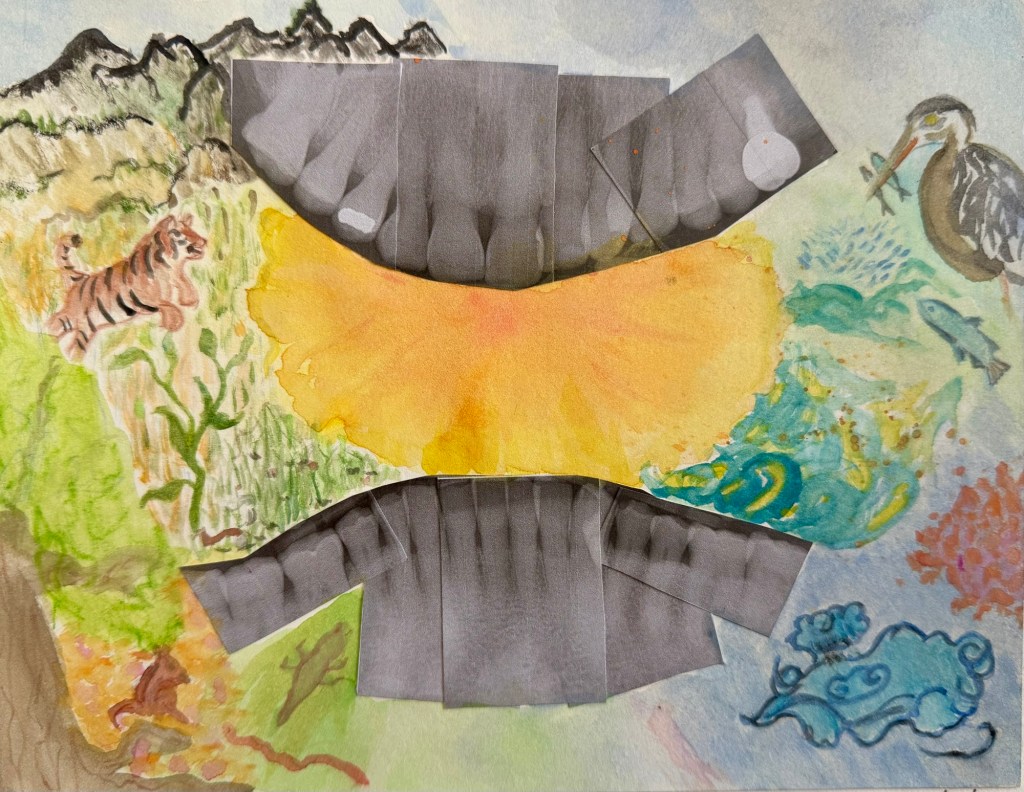
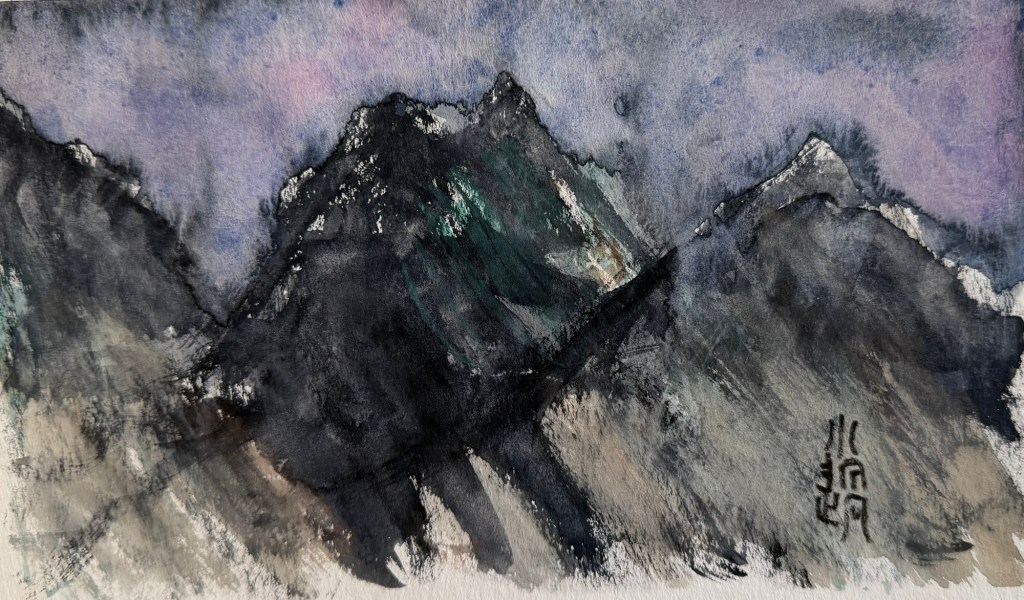
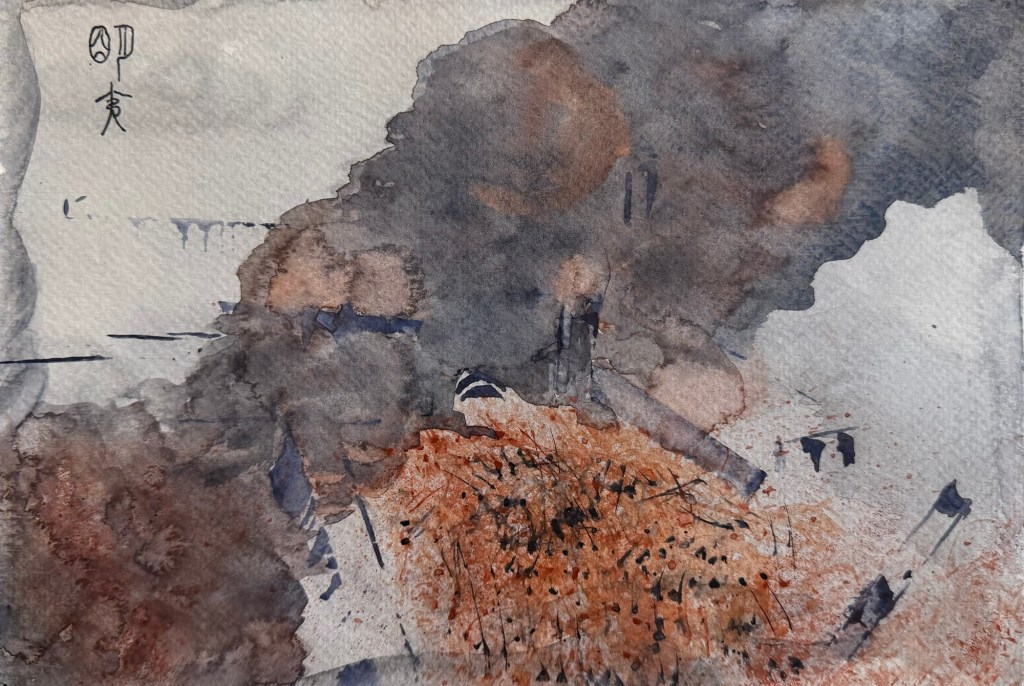
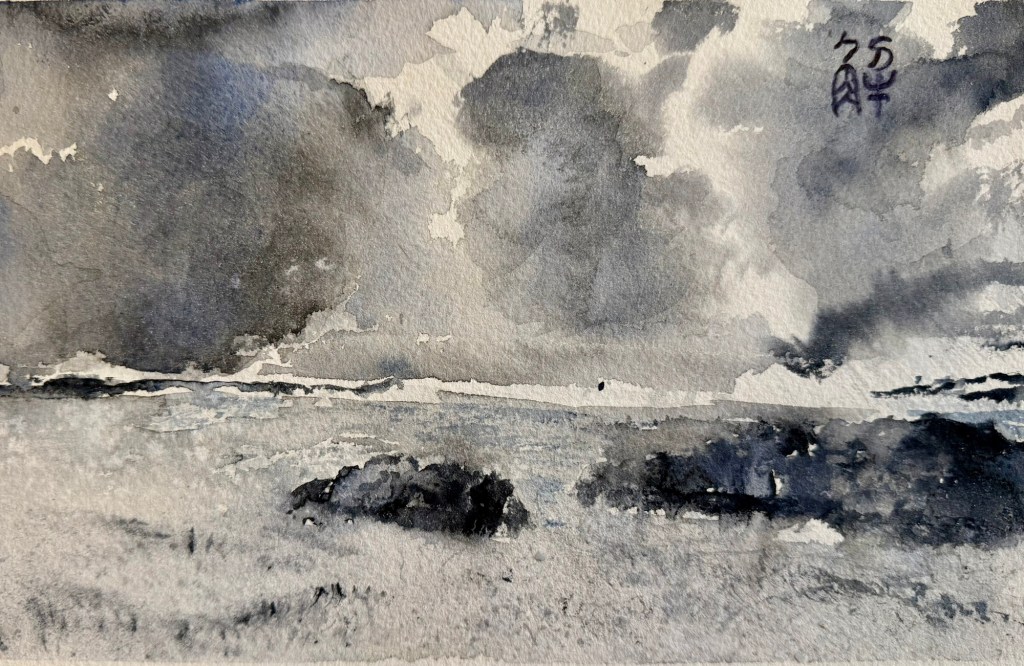
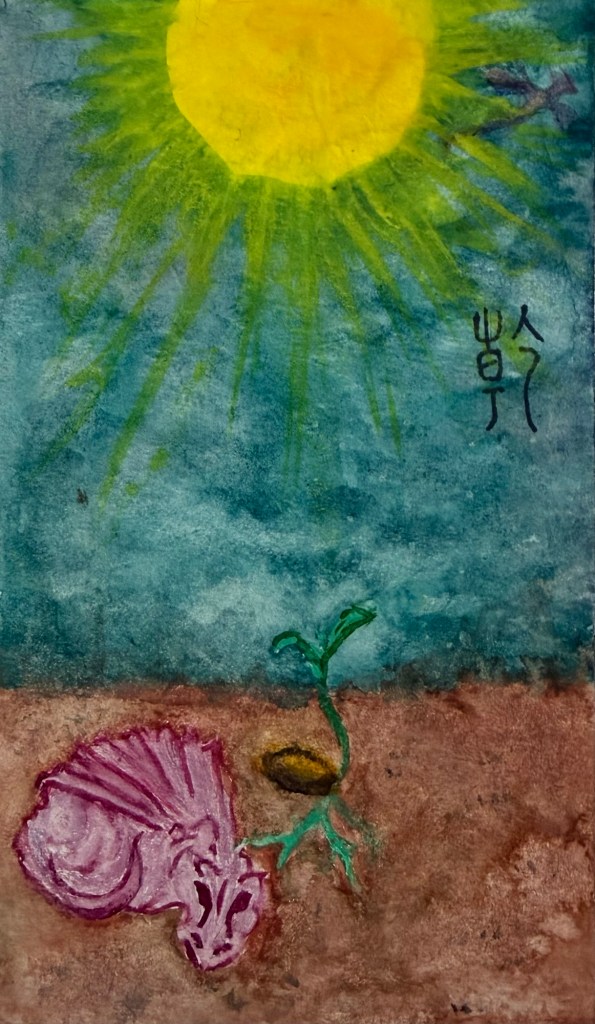
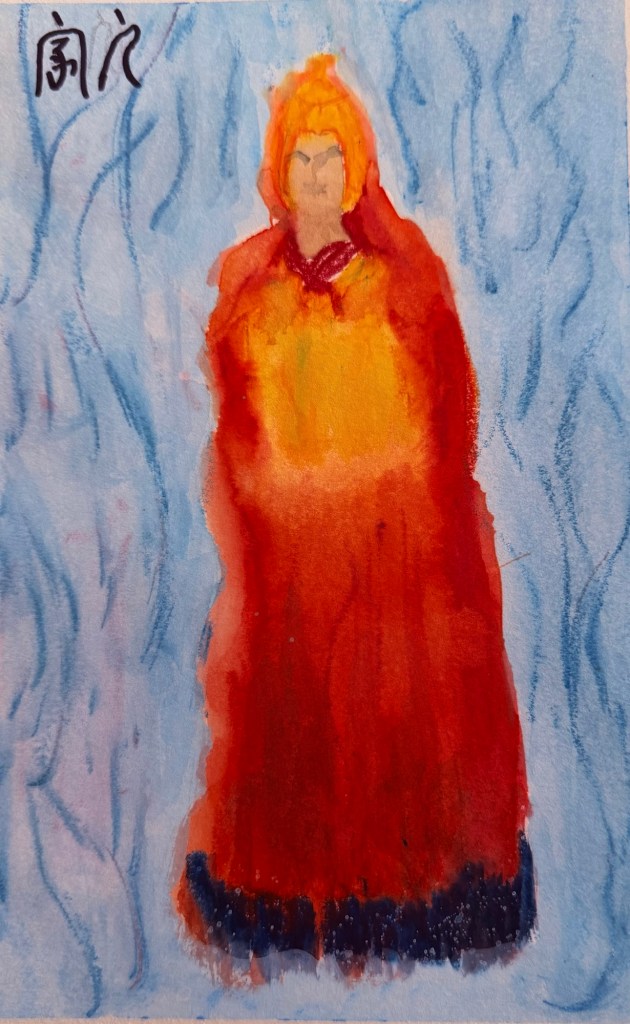
These are listed in the order they were done, with the date of the final watercolor. That was my sequence, and sequence is what matters as we pass from one change to the next.
53: Developing Gradually, October 23, 2023
18: Repair or Branching Out, November 5, 2023
48: Replenishing, November 10, 2023
29: Danger, redone September, 2024
27: Nourishing, November 30, 2023
62: Small Beyond, January 2024
36: Illumination Blackened, January through April 2024
40: Relief, redone September 10, 2024
1: Initiating, August 11, 2024
37: Family or Household, September 19, 2024
Origins of the Hexagrams and the Book of Changes
Legend is that in the beginning Nuwa and her brother/husband Fuxi created humanity. Fuxi is said to have created the original Chinese writing and the Bagua, the eight trigrams. The eight fundamental building blocks of our reality–heaven, earth, water, fire, thunder, wind, mountain, and lake–combine in different ways to create the trigrams. This is said to have happened around 3000 BCE
During the Zhou revolution against the Shang Dynasty, King Wen of Zhou (1100-1050 BCE) was imprisoned for seven years. He used that time to arrange the trigrams into the 64 hexagrams, the sequence used today. King Wen is also said to have written the “Judgments” or “Decisions” that appear with each hexagram; his son, the Duke of Zhou is said to have written the commentaries on the images and “Yao Texts.” Others suggest that the Yao Texts were added later by Confucian scholars.
In the Warring States period (500-200 BCE) commentaries called “The Ten Wings” were written for each of the hexagrams and attributed to Kongzi (Confucius). In 136 BCE Emperor Wu of Han named it Classic of Changes and the first of the five classics.
Whether written by King Wen, the Duke of Zhao, Kongzi, or Confucian scholars, the text is thousands of years old.
How I use the Hexagrams
Although I do not use it for “divination” in the old sense, I like to toss a coin to obtain a hexagram when reflecting on current events or my life. Especially if I read the Decisions and commentaries in multiple translations, it disrupts brooding and sometimes leads to new insights. The watercolor images and attempt at a jin wen calligraphy express my response.
Drowning in frenzied media feeds, bot-memes, and AI hallucinations, I find it comforting to read and think about a text that is several thousand years old. With its origins in the great Zhou revolution and the Warring States period, observations from the Book of Changes are quite relevant today. It is all about relationships, cause and effect, and–above all–the fact and nature of constant change.
Translations
Because the text is so ancient and enigmatic, I think it is useful to consult several translations. The ones I rely on are listed here, ordered alphabetically by last name:
- I Ching: The Book of Changes, translated by David Hinton. Published by Farrar, Straus and Giroux, New York, 2015
- The Complete I Ching–10th Anniversary Edition: the Definitive Translation by Taoist Master Alfred Huang by Alfred Huang. Published by Inner Traditions, 1998, 2010
- I Ching: Bilingual Edition, English and Chinese: The Book of Change, translated by James Legge. Published by Lionshare Chinese Classics, 2015.
- Original I Ching: an Authentic Translation of the Book of Changes, translated by Margaret J. Pearson. Published by Tuttle Publishing, 2011
- The I Ching (Book of Changes) a Critical Translation of the Ancient Text, translated by Geoffrey Redmond. Published by Bloomsbury Publishing
- I Ching, translated by Robert Wilhelm, 1950, available on the web
- The Illustrated I Ching, translated by R.L. Wing Published by Doubleday, 1982
 Hook-Line-and-Thinker